

🐙 A Masterclass in Mimicry and Camouflage
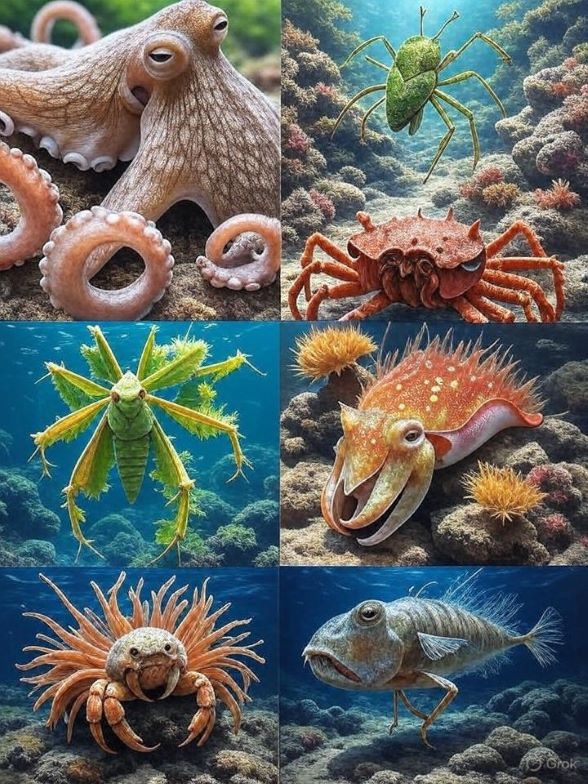
“The speckled wood butterfly . . . evades predators by projecting an illusion,
by pretending to be something other than what it is.”
— David Haworth, Literature and Art History at the University of Melbourne.
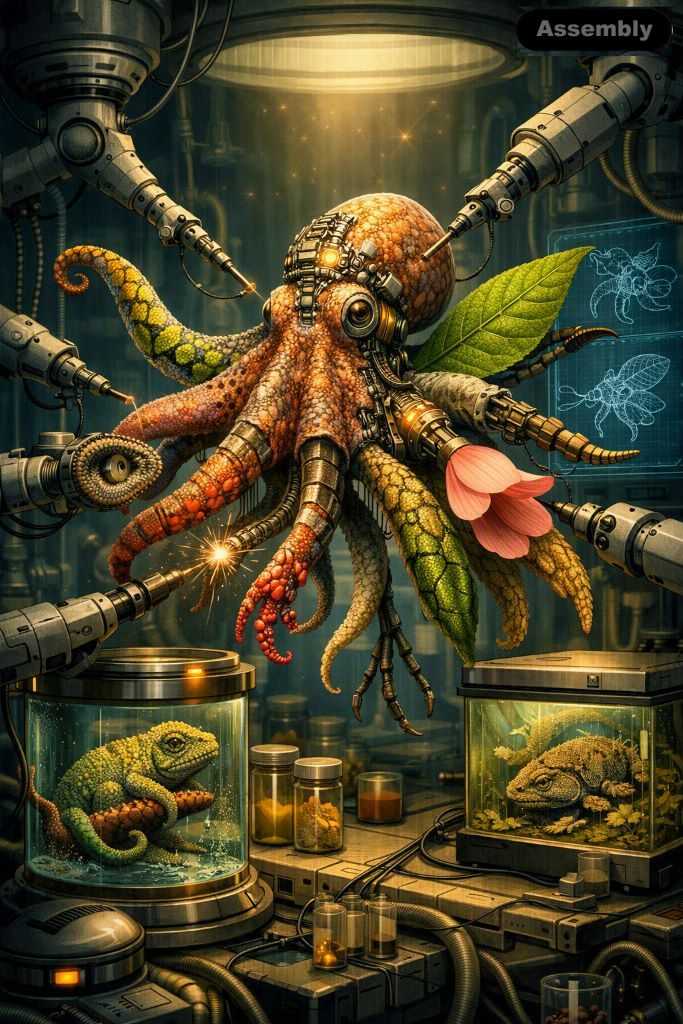
Did creatures and plants
accomplish these designs
by re-engineering
their own anatomy?
Or did the multiple features
of these designs
occur by a long series
of fortuitous mutations?
In the hidden theatres of the natural world, some creatures perform acts so astonishingly precise and coordinated that they defy explanation. From the Mimic Octopus impersonating venomous sea snakes to leaf insects vanishing into the foliage that they resemble, these phenomena are not mere curiosities—they are symphonies of coordinated biological design.
This section explores the most striking examples of mimicry and camouflage in nature, arguing that such feats require an orchestration of sensory, behavioural, and morphological systems far too intricate to be the product of accidental mutation. Instead, they point toward intentional arrangement—an underlying goal-oriented logic, not chance. — (See also the section 'Fingerprint Sensitivity—Calibrated or Fortuitous?')
1. Mimic Octopus
🐙 This creature can impersonate multiple species: e.g.
flounder, lionfish, sea snake, jellyfish.
🐙 The giant Pacific octopus can reportedly change
colour in one-tenth of a second, quickly blending in
with rocks and corals.
🐙 It can alter colour, texture, posture, and movement
to match the animal or item it is mimicking.
🐙 All of this requires visual processing, motor control, and
environmental awareness—simultaneously. No time for
“gradual, incremental changes.”
2. Leaf-Tailed Gecko
- Skin mimics bark, moss, or dead leaves with uncanny realism.
- Even the body outline is disrupted by frilly edges and flattened tails.
- Behaviour includes remaining motionless and choosing matching backgrounds.
3. Leaf Katydid
- Resembles a decaying leaf down to vein patterns, holes, and curled edges.
- Variants mimic different stages of leaf decomposition.
- Combines structural mimicry with behavioural mimicry (for example, remaining still to try and fool predators).
4. Owl Moth
- Wing patterns resemble owl eyes, startling predators.
- Mimicry is not just visual—it can trigger instinctive fear responses in birds.
- Requires precise patterning and pigmentation placement.
5. Viceroy Butterfly
- Mimics the toxic Monarch butterfly.
- Batesian mimicry: harmless species gains protection by resembling a harmful one.
- Demands exact colour and pattern replication.
6. Anglerfish
- Uses bioluminescent lure to mimic prey and attract victims.
- Aggressive mimicry: deception for predation.
- Involves light production, behavioural timing, and specific anatomical configuration.
7. Scarlet Kingsnake
- Mimics the venomous Coral Snake's colour bands.
- Batesian mimicry again—visual deception.
- Requires precise pigment distribution and predator recognition.
8. Leaf Insects
- Entire body mimics leaves, including midrib, veins, and even bite marks.
- Movement mimics leaf swaying in the wind.
- Coordination of morphology and motion is essential.
9. Cuttlefish
- Can change colour, texture, and pattern in milliseconds.
- Uses special cells (chromatophores, iridophores, leucophores) for dynamic camouflage.
- Also mimics objects like rocks, sand, and coral.
10. Spider Crab
- Decorates itself with algae, sponges, and debris—self-decoration camouflage.
- Behavioural choice and tactile manipulation are involved.
- A form of active camouflage requiring environmental interaction
Are these phenomena to be explained by the intelligence or innate abilities of these creatures, as evolution effectively claims? How is it, then, that these same themes are manifest in plants? For example…
🌿 Mimicry in Plants
1. Boquila trifoliata
- This Chilean vine can alter its leaf shape, size, and colour to match the plant it climbs on.
- It mimics multiple host species, as if using visual recognition or chemical sensing.
2. Orchid Deception
- Orchids like the Ophrys species mimic the appearance and scent of female insects, tricking males into pseudocopulation.
- No nectar is offered—pollination occurs through sexual deception.
3. Batesian Mimicry in Plants
- Some harmless plants mimic toxic or unpalatable species, a configuration that deters herbivores.
- For example, certain non-toxic weeds resemble stinging nettles or thorny plants.
4. Vavilovian Mimicry
- Some weeds resemble crop plants.
- For example, rye mimics wheat in early agriculture.
5. Gilbertian Mimicry
- Some plants have structures that resemble butterfly eggs; discouraging real butterflies from laying eggs.
6. Leaf Mimicry for Herbivore Evasion
- Plants such as begonia species mimic dead or decaying leaves.
- This is a form of crypsis, blending into the background.
- (I wonder what would happen if a leaf insect encountered a begonia leaf!)
Each of these examples involves:
- Multi-modal integration: visual, tactile, and behavioural coordination.
- Real-time environmental feedback: sensing and responding to context.
- Purposeful mimicry: not just blending in, but deceiving with intent.
These are not isolated traits—they are holistic systems of interdependent functions, which together provide empirical evidence of a level of orchestration that defies explanations of unmanaged, gradual emergence.
Did creatures and plants with the ability to alter their skin colour, texture, shape, and even specific behaviour patterns, really accomplish these designs by re-engineering their own anatomy?
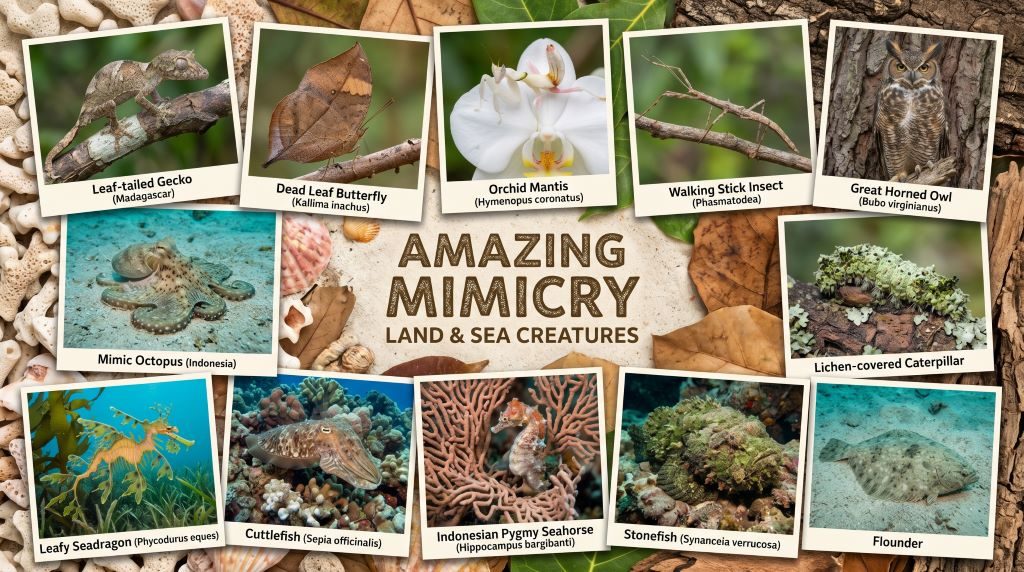
Are these phenomena really explained
by the intelligence or innate abilities of these creatures,
as evolution effectively claims?
These features, in both animals and plants,
provide empirical evidence
of a level of orchestration and design
that defy simplistic explanations.
(See a greater hurdle for orthodox evolution in the article:
The Symphony Before the Composition)